NOTE: The Residential School system is a traumatic subject, as it can evoke memories of past abuse. The Indian Residential Schools Resolution Crisis Line has been set up to support former students of Indian Residential Schools.
You can obtain information on this website or, when in crisis, access emotional support and referral services by dialing 1-866-925-4419 at any time.
On August 2, 1875, the Shingwauk Residential School opened in Sault Ste. Marie, Ontario, a place that is home to the Garden River and Batchewana First Nations and the Métis. During its 96 years in operation, this Residential School sought to assimilate Indigenous children and repress their cultures.
In 1833, Anishinaabe Chief Shingwaukonse (1773-1854) made a request to the government of Upper Canada and the Anglican Church of Canada for a school or Teaching Wigwam, where Anishinaabeg children could learn European-based skills in conjunction with Indigenous knowledge. Like many chiefs in the 19th century, Shingwaukonse viewed such an education as essential to protecting Anishinaabe lands, and sovereignty.
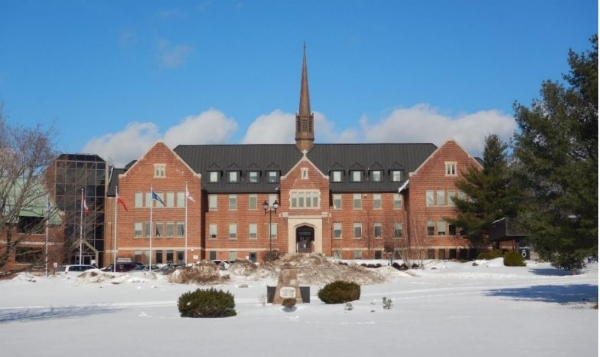
In 1833, a day school was built on Pim Hill in Sault Ste. Marie at Shingwaukonse’s request but closed shortly after due to lack of funding. In 1873, Reverend E. F. Wilson and Shingwaukonse’s sons Augustine and Buhkwujjenene collaborated to raise funds for an industrial-type boarding school. With a small grant from the government, the school was built on the Garden River First Nation, which burnt down six days after opening, under suspicious circumstances. In 1875, Wilson opened a Residential School, named Shingwauk Home, despite Chief Augustine Shingwauk’s opposition to the missionary’s assimilationist views. In 1934–1935, the federal government built an imposing two-and-a-half story red brick building to replace the original Shingwauk Home, which was in bad condition.
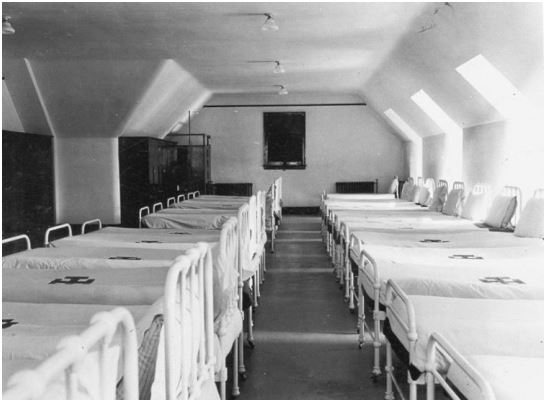
The children who attended the Shingwauk Residential School were between the ages of three and 21, and came from many different regions and First Nations, including Anishinaabeg, Cree, Mohawk, and Abenaki. Students were taken from their homes, some in the hopes of receiving an education, but many were removed by force to the school. Once at the school, they were subjected to a strict routine, enforced by the non-Indigenous staff. The boys worked on the school’s farm, while the girls were responsible for the domestic chores needed to run the school. The children were closely monitored by staff and punished for speaking their mother tongue and practicing their culture. The building was designed to keep girls and boys separate, which meant that brothers and sisters would never or very rarely see each other. The students faced poor living conditions, inadequate nutrition, abuse, and ill health. Many spent their whole childhood at the school and some died before they had the chance to return home.
Shingwauk was one of more than 130 Residential Schools in Canada, which were instrumental to the federal government and churches’ goal to assimilate and eliminate Indigenous Peoples as distinct cultures. This colonizing effort was carried out in several different phases. The establishment of Shingwauk Home in 1875 was part of a broader effort to colonize northwest Canada. By the 1950s, the federal government was pursuing a new integration policy, which meant that older students at Shingwauk Residential School now attended public schools in Sault Ste. Marie, including two built on the same property as the Residential School. In the years that followed, Shingwauk Residential School gradually became a boarding house for younger children. Older students billeted with non-Indigenous families in Sault Ste. Marie. In 1966, the main school building became a student residence, known as Shingwauk Hall. It closed in 1970, one year after the federal government took over its management.
Shingwauk Hall (1934–1935), the Bishop Fauquier Memorial Chapel (1883), the principal’s residence (1935), the former woodworking shop (1951), and Anna McCrea Public School (1956) still stand on the grounds of the former Residential School, which also is the site of the Shingwauk Memorial Cemetery (1876). Since the Residential School closed, this has been a site of cultural reclamation, cross-cultural education and learning, which has been reinterpreted as a place for healing and reconciliation. It now serves as a campus of Shingwauk Kinoomaage Gamig and Algoma University.