
Curiosity and conservation
Lake Superior National Marine Conservation Area
By Violet Davies and Marissa Wegher
Working as a student on the Resource Conservation team at Parks Canada has taught me plenty outside the classroom. Through this experience, I’ve been lucky to work with a knowledgeable and diverse team, taking part in exciting fieldwork, and learning about environmental conservation.
This summer, I helped with invasive species monitoring, marsh studies, and collecting data for Ontario’s Breeding Bird Atlas, all while supporting Parks Canada’s mission to protect and share the natural and cultural wonders of Lake Superior National Marine Conservation Area. From Lake Superior’s boundless, open waters to the remote islands of beach, bush, and rock, Parks Canada protects these amazing places.
In the field of environmental conservation, being able to identify species quickly and accurately is a valuable skill. Practice is important to recognize key traits and tell the difference between similar species quickly and correctly. Last June, Parks Canada partnered with the Royal Ontario Museum to offer a workshop on fish identification to staff and members of surrounding communities. We used guidebooks, preserved specimens, and conducted field sampling to identify species like trout, bass, salmonoids, minnows, and pike.
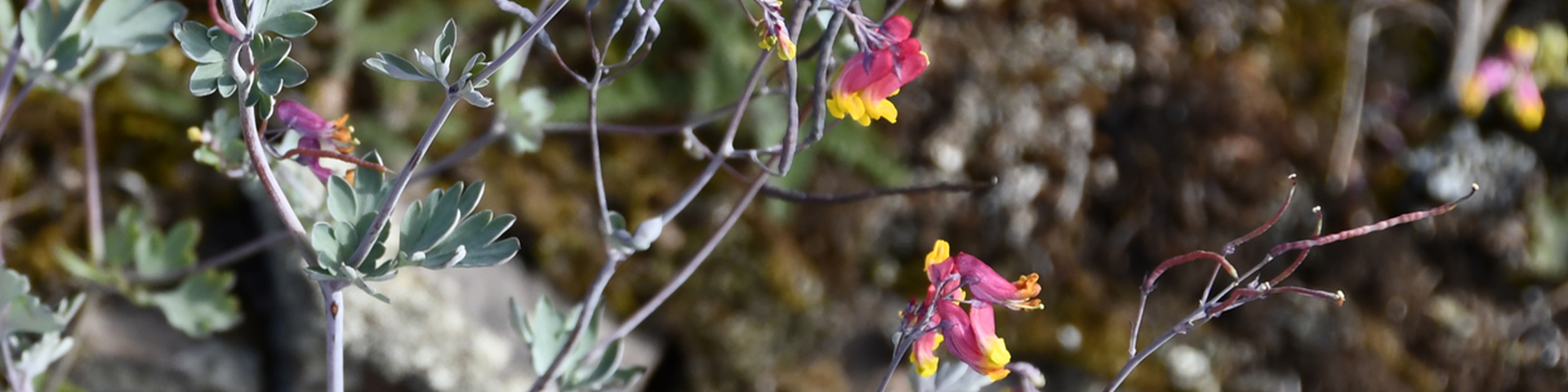
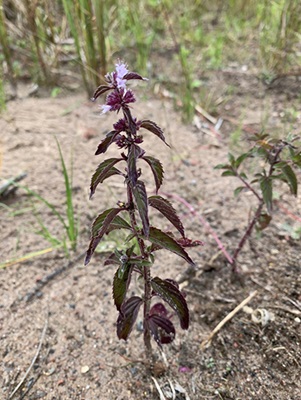
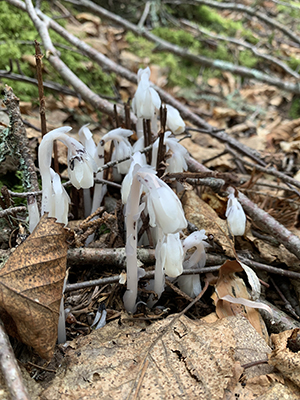
While workshops are great for learning, most of my species identification learning came from working in the field, taking biological inventories of species. We used guides or the prior knowledge of colleagues to identify species. While working on the islands of Lake Superior, I learned to identify plants I’d never seen before, like Rock Harlequin (a pink and yellow flower), Canada Mint (a purple flower with minty leaves), and Ghost Pipe. Ghost Pipe is especially interesting because it’s a type of wildflower that lacks chlorophyll (the stuff that makes plants green). As a result, it can’t use sunlight to make energy like other plants. Instead, it gets nutrients from the roots of nearby trees. Ghost Pipe looks a lot like a fungus, but it’s actually a flower, and I wouldn’t have learned about it if I hadn’t been out in the field.
One of my favorite discoveries during the season was the Red-breasted Merganser, a duck many people might recognize because it looks like it has a mohawk. While collecting data for Ontario’s Breeding Bird Atlas, I saw two adult mergansers swimming along the shore, followed by several fluffy ducklings. Later that day, we found a hidden nest of merganser eggs beneath a tree. Did you know many duck species prefer to nest on the ground under trees rather than up in branches?
These are just some of the many other amazing learning experiences I’ve had at Parks Canada. Being curious about the world around you and learning how to identify plants and animals is an important skill. There are many tools to help with species identification, such as guidebooks and apps, like iNaturalist. iNaturalist is a global database where you can record your observations, share them with other naturalists, discuss your findings, and contribute to biodiversity sciences. Learning about the plants and animals around me has made me care more deeply about the natural environment and want to contribute to its protection.
So, next time you’re outside, I encourage you to take a moment to look more closely at the plants and animals around you. You never know what you might discover—just follow your curiosity, and you could help protect the natural wonders of our world!
Back to shoreLINES
- Date modified :