

Adaptive management
Parks Canada's report on conservation from 2018 to 2023
Every project provides an opportunity to learn how to improve conservation efforts. Parks Canada uses adaptive management and evidence to expand knowledge and guide decisions.
Adaptive management is an approach that involves learning from experience and adjusting actions based on this learning. This approach helps Parks Canada make better choices and leads to better results.
Parks Canada's conservation cycle follows the Open Standards for the Practice of Conservation, which is a framework that puts adaptive management into practice. This approach guides a project through its progressive stages, or steps: Assess, Plan, Implement, Analyze and Adapt, and Share. By following these steps, Parks Canada ensures that conservation efforts are deliberate and effective.
By using the best available research, data, and knowledge from different ways of knowing, Parks Canada strives to continually improve actions and policies aimed at conserving and restoring ecosystems.
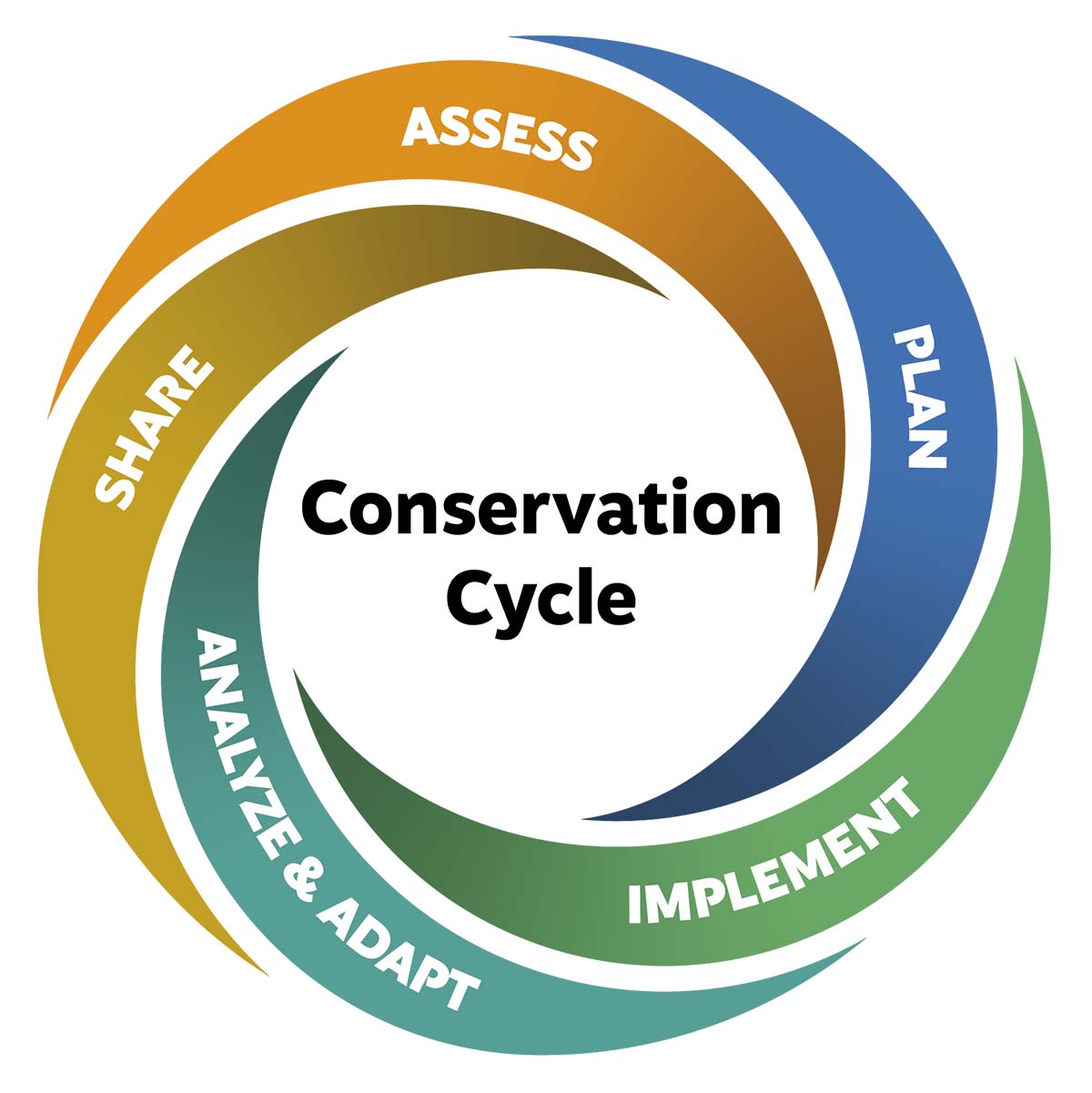
Image description
A circular graphic with the words "conservation cycle" in the middle. The following words are intertwined around the circle: assess, plan, implement, analyze and adapt, share.
Featured projects

Using prescribed fire to restore the landscape
Improving ecological health through the planned use of fire and adaptive management, in mountain national parks.

Atlantic Salmon recovery takes a regional approach
Protecting Atlantic Salmon through regional collaboration using the Conservation Cycle, in Atlantic Canada.
Related links
- Date modified :