
Mammals
Rouge National Urban Park
Over the years, 44 mammal species have been observed in Rouge National Urban Park. While some sightings are quite rare, others are much more common. Here are just a few of the mammal species that call Rouge National Urban Park home.
Beaver
Canada’s national animal, look for evidence of beaver activity along the banks of the Little Rouge River. Gnawed tree stumps are a sure sign that beavers are at work. Beavers can cut down up to 200 trees per year to construct their dams and lodges. In areas with shallow water, a dam is used to create a deeper pond that will not freeze to the bottom in winter. The pond provides protection from predators and year-round underwater access to their lodge. The lodge is where beavers reside, with each lodge housing a single family group consisting of parents, kits and young beavers up to two or three years old.
Bats
Hoary Bat: The hoary bat is the largest bat out of the 8 species found in Ontario. They get their name from their frosty white tipped hair resembling hoarfrost. These bats normally roost alone in the foliage of trees so they can typically be founded in wooded areas of the park.
Silver-Haired Bat: Silver-haired bats are black all over with white tipped hairs. During summer months, female silver-haired bats appear to migrate farther north than males who stay in the lower great lakes region. They usually roost in tree trunk cavities and therefore are found in wooded areas of the park.
Eastern Small-Footed Bat: The smallest bat in Ontario and rarest in Canada, the eastern small-footed bat is less than 10cm long and weighs 3-7g! These bats roost in a variety of habitats including under rucks, in caves, under bridges, in hollow trees and more – you never know when you’ll have the chance to spot one in the park!
Eastern Red Bat: The brownish orange fur makes the eastern red bat stand out as it lives a solitary life at the tops of trees.
Little Brown Bat: The Little Brown Bat is the most common bat in Canada, found across the country. These bats weigh only 7-14g which means that despite having “Little” in their name, they are not the smallest bat found in the park. Their winter roosts or “hibernacula” are in caves whereas in the summer their roosts can be buildings, tree hollows or other places that stay warm and dark during the day.
Big Brown Bat: Big Brown Bats are medium in size with dark brown fur. They are one of the more common bat species in Ontario and can typically be found in wooded areas near water. They prefer cool dry locations near cave entrances to hibernate and stay fairly close to these sites during the summer. This is the only species of Ontario’s 8 bat species that is not listed as a Species At Risk.
Tricolour Bat: The tricolour bat is one of the smaller bat species in Ontario. These bats are grey-brown in colour, but their back hairs are tri-coloured; dark brown at the base, more yellow in the middle and grey at the tips. In the summer, tricolour bats roost in rock crevices, caves and tree foliage and hibernate in caves during the winter.
Eastern Chipmunk
These small rodents can often be found in forests, where trees and shrubs provide cover from predators. Chipmunks eat a variety of food, including fruit, nuts, seeds, mushrooms, insects and snails. They spend much of their time gathering food and storing it in their underground burrows for the winter.
Eastern Coyote
Coyotes are present in Rouge National Urban Park, though they are generally quite shy and generally try to avoid people. They have a diverse diet that includes small mammals such as rabbits and rodents, berries and wild fruits, insects and carrion (dead animals). They also occasionally hunt in pairs or groups to take down larger animals such as deer. You may find coyote scat along the trail. It looks similar to dog scat but usually contains hair from the animals they prey on.
Eastern Gray Squirrel
Eastern gray squirrels are a common sight in the Greater Toronto Area. Despite their name, eastern gray squirrels can actually be gray or black. The black variation is common in Ontario, which is at the northern end of their range, suggesting the darker fur colour may provide an advantage in colder climates.
Groundhog
Groundhogs, also known as Woodchucks, are one of the larger members of the ground squirrel family called marmots. Despite being called groundhogs, they are also great swimmers and can climb trees. Groundhogs typically like forests and fields so they have lots of spaces to enjoy in the Rouge.
Long Tailed Weasel
The long tailed weasel is one of the three types of weasels in Canada that can be found in Rouge National Urban Park. They shed their brown summer coats for snowy white winter coats to help them camouflage in the snow.
Meadow Vole
Also known as a field mouse, the meadow vole is typically found in grasslands where it creates a network of tunnels through the vegetation that allows it to forage for food more easily.
Muskrat
Muskrats are similar in appearance to beavers, but there are a few key differences that can help you tell them apart. Muskrats are much smaller, with an average weight of only 1 kg compared to the beaver at 16-32 kg and they also have long slender tails as opposed to flat broad tails. Muskrats build lodges, but not dams, and their lodges are mainly made of plants and mud, compared to a beaver’s lodge which is made of sticks and logs. Look for muskrats in restored wetlands throughout the park.
Opossum
Opossums are cat sized with grey fur, small black eyes, white face, a pointy snout and a long tail. They live in forests preferably closer to water. They also help limit the spread of Lyme disease as they are a natural predator of most disease-carrying ticks.
Porcupine
Porcupines are rodents well-known for their sharp quills. They have approximately 30,000 quills that are actually modified hollow hairs attached to a muscle that can pull them up and down. They live in wooded areas and are often found climbing trees.
Red Fox
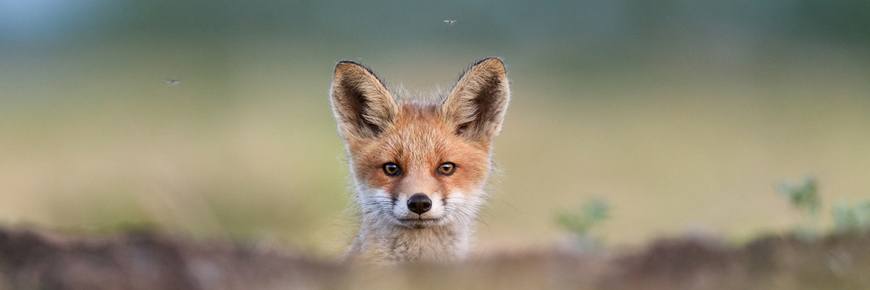
The red fox is a member of the canine family and is about as large as a small to medium size dog. Although red is the most common coat colour, red foxes can also be brown or black. They are typically quite shy and avoid people. The diet of a red fox consists mainly of small mammals such as mice, voles and rabbits, but they also eat birds, eggs, fish, amphibians, fruits and insects. Red foxes are highly adaptable and are found all across Canada, the United States, Europe, Asia, North Africa and Australia.
Red Squirrel
These small but feisty rodents can often be seen scurrying up and down tree trunks or running along branches. Red squirrels mainly eat nuts and the seeds of conifer cones, which they store in a cache to sustain them over the winter. When cones are scarce, they supplement their diet with other foods such as mushrooms, berries, tree sap, insects and bird eggs.
White-tailed Deer
White-tailed deer are one of the larger animals found in Rouge National Urban Park. In the winter, deer often take shelter in the dense cedar forests of the park.
Related links
- Date modified :