
Carrie Matilda Derick (1862-1941) National Historic Person
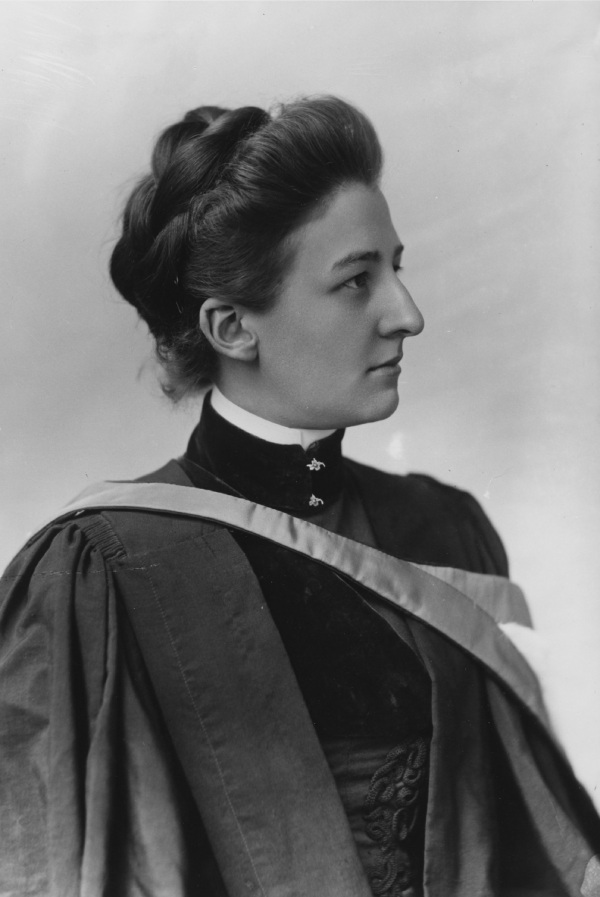
© William Notman, McGill University Archives, PR014514
Carrie Matilda Derick was designated as a national historic person in 2007.
The Historic Sites and Monuments Board of Canada reviewed this designation in 2024.
Reasons for designation
As an internationally recognized botanist, brilliant student, inspired teacher, and pioneer in the field of genetics in Canada, Carrie Matilda Derick made an outstanding contribution to science in both the academic and popular spheres.
Despite decided opposition to her attempts to further her career, she became one of the first women to be appointed to a full professorship in Canada, serving as professor of Comparative Morphology and Genetics at McGill University from 1912 to 1929.
As a feminist, suffragist, social reformer and activist, she tirelessly promoted her far-reaching vision of political and educational equality for women.
As a scientist, she held eugenic views that were widely shared by others in her academic circles. As a member of a wide range of women’s organizations, she lectured on eugenics to a variety of audiences and used her authority as a scientist to argue for the segregation of people she viewed as “unfit” from the rest of society.
Review of designation
Reviews are undertaken on an ongoing basis to ensure that designations reflect current scholarship, shifts in historical understandings, and a range of voices, perspectives and experiences in Canadian society.
In 2024, this designation was reviewed to understand Derick’s connection to the eugenics movement. The reasons for designation were broadened to include mention of her views and actions as a scientist in support of the advancement of eugenics.
Source: Historic Sites and Monuments Board of Canada, Minutes, June 2024.
The National Program of Historical Commemoration relies on the participation of Canadians in the identification of places, events and persons of national historic significance. Any member of the public can nominate a topic for consideration by the Historic Sites and Monuments Board of Canada.
- Date modified :